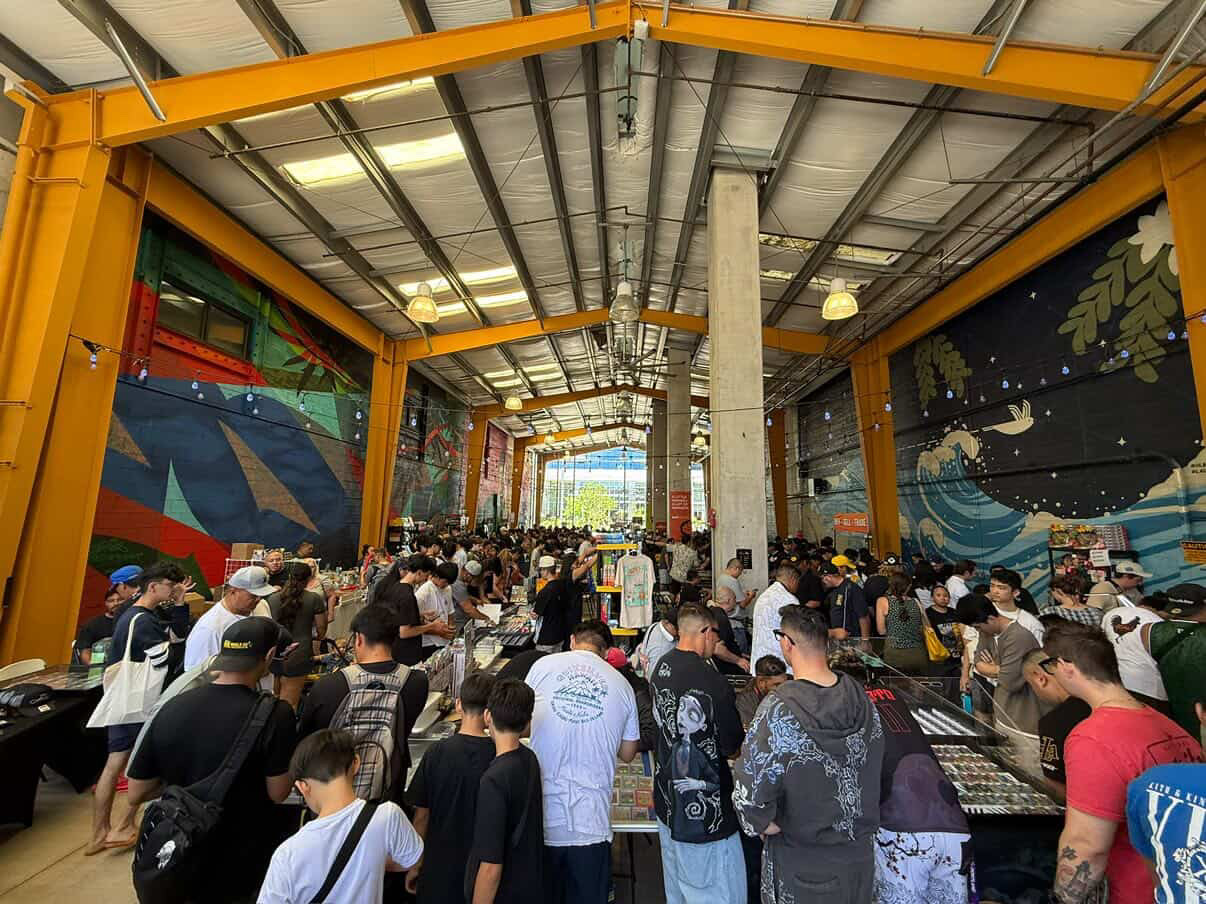
If you've ever scrolled past a flyer for a "card show" and wondered what actually goes on inside, you're not alone. Card shows have exploded in popularity over the last few years, but for someone who's never been, walking into a room full of vendors, glass cases, and binders can feel a little intimidating.
This guide breaks down everything you need to know — what a card show is, who goes, what to bring, how to act, how to buy and sell without feeling lost, and the mistakes most first-timers make. Whether you're a longtime collector who's never made it to a show, or someone who got curious after watching a pack-ripping video on TikTok, you'll leave this page knowing exactly what to expect.
We'll wrap up with a section dedicated to the Hawaii scene — every recurring show across Oahu, Maui, the Big Island, and Kauai, with links to the dates and venues we track on this site.
What Is a Card Show?
A card show is an in-person event where collectors, dealers, and hobbyists buy, sell, and trade trading cards. Think of it like a flea market or convention dedicated entirely to the hobby — vendors rent tables, set up their inventory, and the public comes through to shop, trade, browse, and talk cards.
Most shows feature a mix of:
- Sports cards (baseball, basketball, football, hockey, soccer, MMA)
- Trading card games (TCGs) like Pokemon, Magic: The Gathering, Yu-Gi-Oh!, One Piece, Lorcana, and Flesh and Blood
- Non-sport collectibles — Funkos, comics, anime accessories, Marvel, Star Wars, and other entertainment cards
- Graded cards in slabs from companies like PSA, BGS, CGC, and SGC
- Sealed product — booster boxes, tins, blasters, hobby boxes
- Supplies — sleeves, toploaders, binders, magnetic cases
Shows range in size from a dozen tables in a community center to massive expos with hundreds of vendors and special guest signings. The vibe is never quite the same from one show to the next — some skew collector-focused with high-end glass cases and graded slabs front and center, others lean hybrid with families, kids cracking packs, and a flea-market energy. Before you go, scroll through past photos on Instagram, the organizer's page, or a community calendar like hawaiicardshows.com to get a feel for whether it's family-friendly, adults-only, or somewhere in between.
What Actually Happens at a Card Show
Walk in, and the first thing you'll usually see is a row of vendor tables — each one its own little shop. Some specialize (one might be all vintage baseball, another might be Pokemon singles only), and others are generalists with a bit of everything.
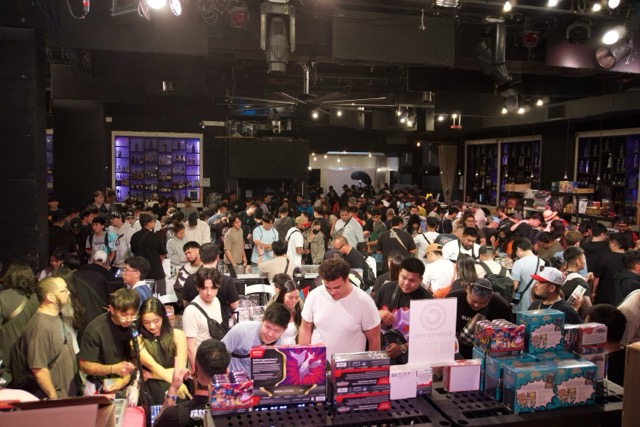
Here's what you'll typically encounter on the floor:
Vendor tables
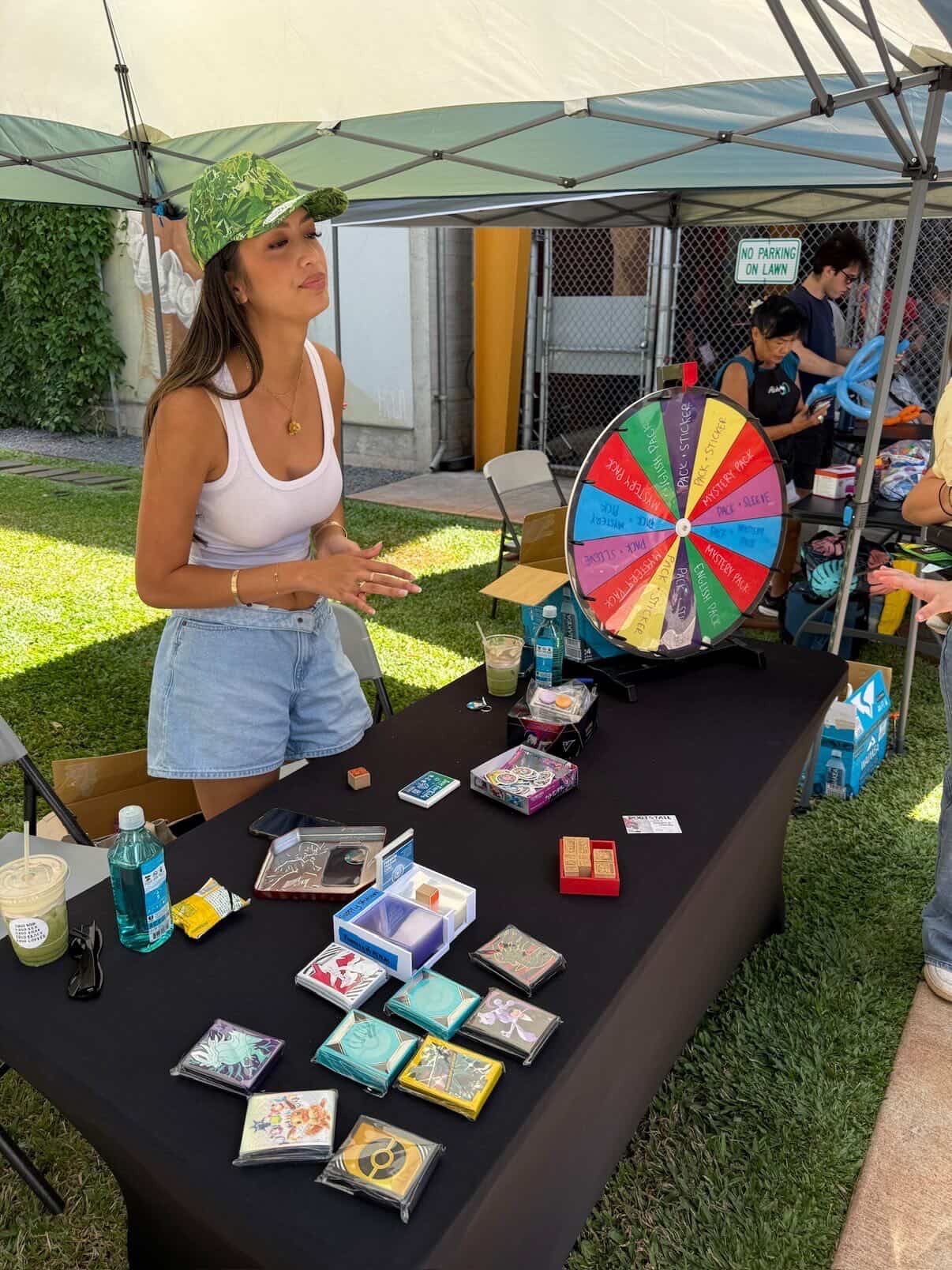
Sellers display cards in glass cases, binders, monster boxes, and dollar bins. Pricing varies — some tag everything, some negotiate verbally, some run "make me an offer" tables.
Grading
Onsite grading is usually a feature of the larger shows. Some collectors will fly to a specific show specifically because PSA is set up for onsite submissions — so if that's something you want to take advantage of, check the show's lineup before you book travel. At smaller shows, you'll typically find affiliate grading reps who accept submissions and submit on your behalf. In PSA's case, this can be a real benefit: you can submit through the affiliate without paying for the membership, and many of them offer pre-grading where they'll give you an estimate of what they think a card will grade before you commit.
Trade nights and trade tables
Some shows dedicate space — or whole events — to trading rather than buying. Bring a binder, sit down, and swap. A heads-up though: some shows will market themselves as a "trade night" when in reality it's just a card show with vendors running tables. If you're chasing a specific vibe, scroll through photos from past editions of the show before you go to get a feel for what to expect.
Special guest appearances
This isn't just sports. Bigger shows often bring in athletes, voice actors, artists, and hobby personalities for paid autographs or meet-and-greets — anyone with a name and a connection to the cardboard. It can happen at smaller shows too: Tumua Tuinei dropping in to Keep It Aloha in Hawaii is a good example of the kind of moment you might not expect at a community-scale event.
Food, raffles, giveaways
Most well-run shows have something going on beyond the tables — door prizes, raffles, sometimes food trucks outside.
Who Goes to Card Shows?
The honest answer: a much wider mix of people than you'd expect. Card shows aren't just middle-aged guys hunting vintage anymore. Who you see on the floor also depends on the kind of show you're at — as TCG has blown up over the last few years, organizers have gotten more intentional about curating their vendor mix. Some shows go sports-only, some go TCG-only, and some — like Frontrow Card Shows on the mainland — work hard to strike a balance across products and audiences. Worth knowing before you go.
A typical show floor includes:
- Set collectors chasing specific players, teams, or sets
- Player collectors (PCs) who buy everything they can find of one athlete or character
- Investors and flippers looking for undervalued cards or arbitrage between shows
- Vendors and small business owners who do this full-time or as a side hustle
- Parents and kids — Pokemon especially has brought a huge family demographic back to shows
- TCG players stocking up on singles for tournament decks
- Curious beginners who just heard about the hobby and want to see what it's about
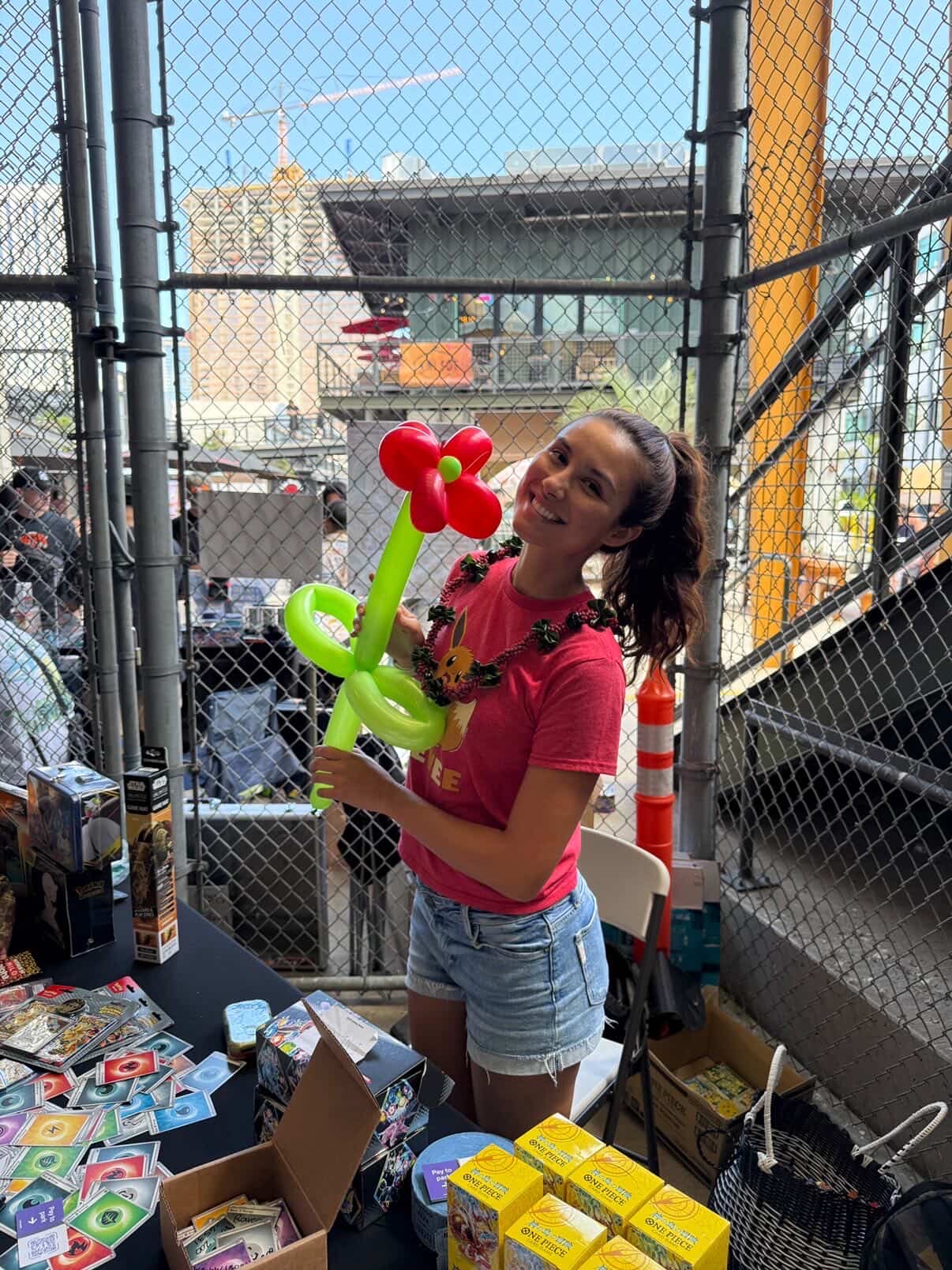
Nobody's going to quiz you at the door. Show up, look around, ask questions.
What to Bring to Your First Card Show
You can absolutely walk in empty-handed and have a great time. But if you want to actually buy, sell, or trade, here's what helps:
Cash
Cash is still king at card shows. Many vendors take Venmo, Zelle, Cash App, or PayPal Goods & Services, and a growing number have card readers — but cash gets you the best deals, full stop. Pull a price down by 10–15% just by flashing cash.
A goal — or an open mind
If it's your first time, you don't need a plan. Walk in with an open mind, take in the floor, and let yourself be a beginner. There's no quiz at the door. But once you've got your legs under you, having a focus keeps you from getting overwhelmed and walking out with random stuff you didn't actually want. That focus can be a checklist of cards you're hunting, your master set binder open to the gaps, or a specific player or set you're building. Anything that gives the day a direction.
Comps
Comps — short for comparables, or completed sales depending on who you ask — is sales data (not listings) that buyers and sellers use to understand what a card is actually worth. Listings tell you what someone wants for a card. Comps tell you what someone actually paid. Big difference.
Having comps on your phone is the single biggest thing separating informed buyers from people who get worked. It matters even more if you're bringing cards to sell or trade — know what your stuff is worth and what you'd take for it. Walking up to every vendor asking "what's your offer?" without a number in your head wastes their time and yours.
What to use depends on what you collect:
- Sports cards: eBay sold listings or 130point.com.
- Graded cards: Card Ladder and Alt are the defaults. Both give you population data and clean comp history per grade.
- Modern TCG: TCGplayer is the default comp, full stop.
- Vintage TCG / low-volume cards: a mix of TCGplayer (where there's enough sales data) and eBay sold for everything else. Condition matters a lot more here, so look at the actual scans on recent sales.
- Overall: keeping a list on Collectr or TCGplayer makes it easy to check comps from a vendor's table or surface your wantlist while trading.
And if a vendor's price looks high and you can't figure out why, just ask. A confident vendor will walk you through where they got the number — centering, recent sales, condition notes, whatever. If they can't, that's information too. One less vendor to worry about.
A trade binder (or two)
Bringing things to trade helps your budget go further. Make it easier on yourself by keeping a separate binder or case that's only trade fodder — that way you don't accidentally hand over your favorite card mid-conversation. If you're working on a master set, also bring a list (or the set binder itself) so you don't accidentally buy duplicates of cards you already have.
Comfortable shoes and a water bottle
Sounds dumb until you've stood on concrete for four hours.
Patience
Don't ever feel pressured to buy a card because a vendor is pushing it. If the price doesn't feel right or the condition's off, take a lap. Look at other tables. Come back. If you stay calm and don't bite on the first push, you'll often find the same vendor offers you a better deal on the return trip anyway. Patience is a virtue at card shows.
The other side of it: the good deals usually aren't on top of the case. Dig.
Card Show Etiquette: The Unwritten Rules
This is the part nobody explains, and it's why a lot of first-timers feel awkward. Here's what regulars know — and we've expanded these into a deeper 10-rule etiquette guide if you want the full breakdown.
- Ask before touching. Cards behind glass or in display cases — always ask the vendor to pull them. Even cards in binders, ask first. Some vendors are chill, some aren't, and the polite move is to check.
- Don't lowball aggressively on a first offer. If a card is marked $100 and you offer $40, you're not negotiating — you're insulting them. A reasonable opening is usually 10–25% off the asking price.
- "What's your best?" is a real move — for the right cards. It's the standard way to ask for a vendor's bottom price without naming a number first. Just save it for bigger cards or when you're buying a stack of singles at once. Asking "what's your best?" on a $7 card is asking the vendor to eat margin that isn't really there — a $1 discount is already over 10% off, which is a lot on a low-dollar card. Use the move where the math makes sense.
- Bundle for better prices — but be realistic. Pulling three or four cards from the same vendor and asking for a combined price almost always gets you a discount. Just know the math: you're not getting a deal on a $12 card. The "logical" $10 ask is an 83% offer, and the vendor probably took it in around 80% — that's basically asking them to give it to you for free. Where bundling actually works is in round numbers. Pick up $55 worth of cards and ask for a flat $50. Vendor moves volume, you save a few bucks, everyone wins.
- Don't camp at one table. If you're not buying and someone's waiting behind you, step aside. Browse, come back, browse again. Vendors notice (in a good way).
- Ask about a card, don't talk it down. Mid-negotiation, vendors know what you're doing when you suddenly notice a soft corner or off-center print — they hear it all day. Most will knock off a few percent in good faith for a real condition issue, but trying to chop a card in half over centering is bad form. A better move: ask the vendor how they'd condition the card, or "is the corner something you noticed?" That's a real question. If they hadn't seen it, you've given them a chance to revisit the price honestly. If they had, you'll learn how they think about condition — which is its own kind of information.
- Cash deals get cash prices. Negotiate with the payment method in mind. If you drive a hard bargain and then pull out your phone to Venmo or a card reader, expect the vendor to walk the deal back. That's not them being shady — most are eating 3% in fees on digital, and the cash discount you just negotiated assumed cash. Decide how you're paying before you negotiate.
- Tip the breakers and stream hosts. If you hit and you had fun, throw a few bucks. Small thing, builds the community.
How to Buy at a Card Show
A few principles that'll save you money and headaches:
Walk the whole floor before you buy
The same card will often be at three different tables for three different prices. Make a quick mental map, then go back.
Know your comps
Before you pull the trigger on anything over $50 or so, check the last few sold listings. The tool depends on what you're buying: for sports, eBay sold or 130point; for graded sports, Alt or Card Ladder; for modern TCG, TCGplayer is the default; for vintage TCG, a mix of TCGplayer and eBay sold (condition variance matters more). You don't need to be exact — you just need to know if you're being asked $300 for a $180 card.
Buy the card, not the slab
A PSA 9 from one card can be wildly different from a PSA 9 of the same card with better centering or a cleaner print. Look at the actual card, not just the grade on the label.
Be careful with raw vintage
Trimmed, recolored, and altered cards are a real problem in the vintage space. If you don't know what to look for, stick to graded examples until you do. If you're ever unsure about something on a card, ask the vendor directly or get a second opinion from a friend or another collector nearby — just don't pull the card away from the table to inspect it. That's a fast way to make a vendor nervous.
Counterfeits exist
Especially in Pokemon, vintage basketball, and high-end Magic. If a deal seems too good, it usually is. Compare to known authentic examples on your phone.
Save your receipts (or at least screenshots)
For anything significant, get a receipt or a Venmo note that says what you bought. Useful for taxes, useful for resale, useful if anything goes sideways.
How to Sell or Trade at a Card Show
Selling and trading at shows is a different skill than buying, and it's worth doing at least once even if you don't plan to vendor.
Selling to dealers
Walk up, ask if they're buying, show them what you have organized and sleeved. What you can actually get varies a lot — it depends on the category, the price tier, and how liquid the card is.
For TCG under $20–$50, expect around 70% in cash and 80% in trade. Less liquid cards (think low-grade modern slabs) often pull lower offers. For bigger cards — modern SIRs, anything over $100 — you can usually fight for a higher percentage, especially walking just one or two cards around to get competing offers.
If you're selling raw bigger cards, expect condition and centering to come up. The same way a buyer might try to nudge a price down for a white dot or an off-center print, a vendor will use those same things to discount the percentage they'll pay you. That's just the other side of the table.
If you're selling a lot (a stack or a binder dump), expect to take a lower percentage. The vendor is buying everything — liquid and illiquid — and pricing in the time it'll take them to actually sell through it. That's not a rip-off; that's the math of a wholesale buy.
One more thing worth saying: it's not always about squeezing every last drop out of every vendor. If you find a few vendors you actually like dealing with, selling to them at a fair percentage builds the relationship. When it comes time to move something harder — illiquid, weird condition, niche set — those are the vendors who'll help you out. The hobby's small. Repeat business with the people who treat you right pays off.
Whichever direction you go: walk in knowing what you'd take. If you don't have a number in mind, you're wasting their time and yours.
Trading peer-to-peer
Most shows have a trade night or a designated trade area. Bring a binder, leave it open, and people will flip through. Have rough values in mind for your bigger cards.
Setting up your own table
Eventually you may want to vendor a show yourself. Common advice is to start with the organizer — we'd push back on that. You're actually better off building relationships with the vendors at shows you already attend, then asking them for advice or an introduction when you're ready. That path puts a recommendation behind you instead of a cold ask.
The essentials to actually get started are simpler than most people think:
- A display case for your bigger cards
- A binder (or a few) for the rest
- A table cloth
- Inventory worth showing up with
Everything else (lighting, fancy signage, a card reader) comes second. Handle cash + digital via PayPal or Venmo — a lot of working vendors don't bother with card readers, and you won't miss anything by skipping it early.
The one thing you can't skip is your local permit. In Hawaii, resellers need a General Excise Tax (GET) License, and most organizers will require you to provide it before they'll book your table. Check your state or county's requirements before you sign up.
Common Mistakes Beginners Make
A few things to avoid your first few times out:
- Spending your whole budget at the first table. Walk the floor first.
- Buying without checking comps. Phones exist. Use them.
- Bringing cards loose or unprotected. Sleeves and toploaders, minimum.
- Not asking questions. Vendors are mostly people who love this hobby. They'll talk shop with you for hours if you let them.
- Treating it like a transaction-only event. The relationships you build at shows are part of the long-term value. Be a regular face.
- Getting tilted by a bad pull or a missed deal. Long game. Always.
Walk the whole floor once before you buy anything. The same card is often available at three different tables for three different prices, and the most-trafficked tables aren't always the cheapest.
Card Shows in Hawaii
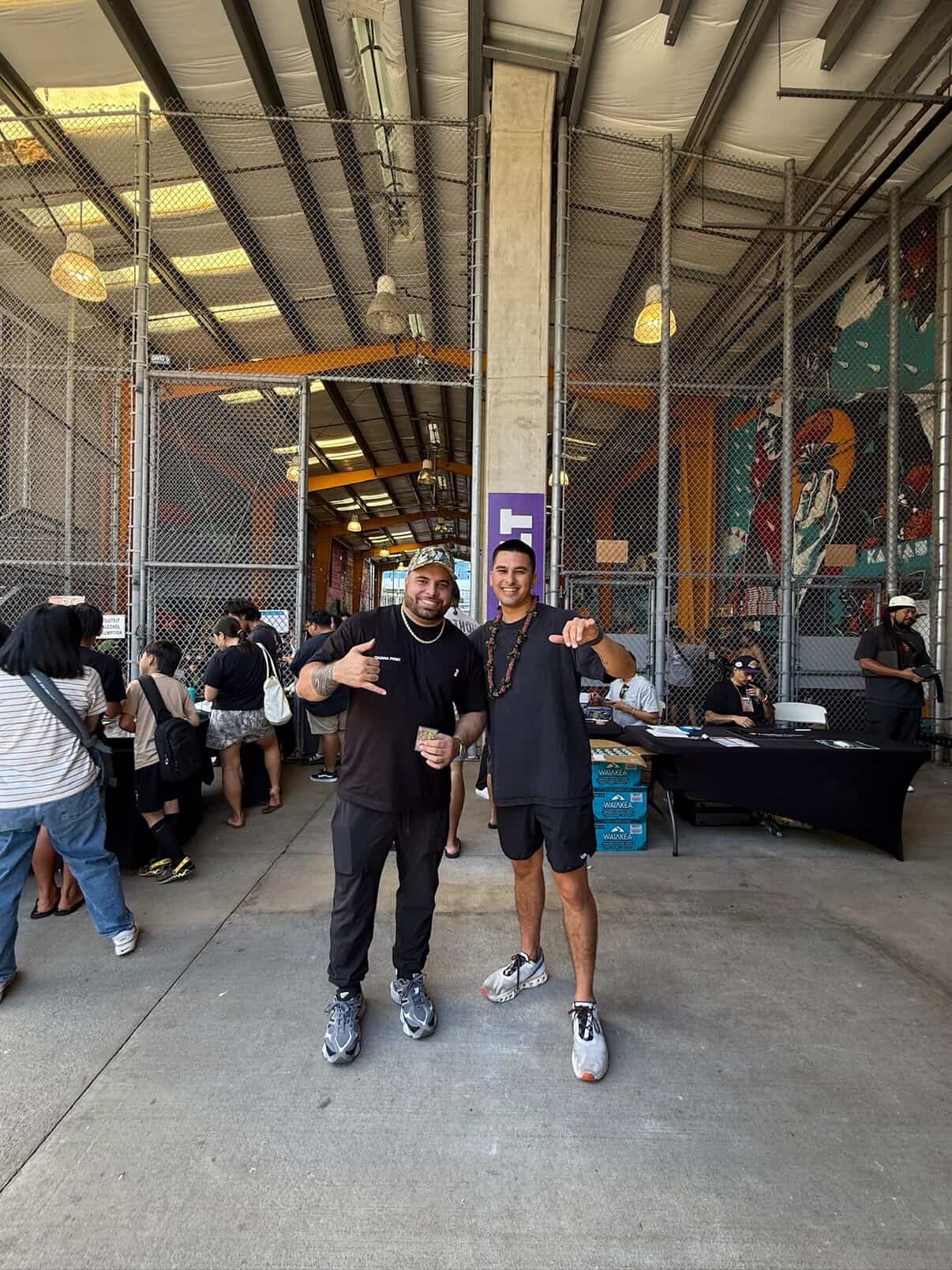
Hawaii has a small but seriously active card show scene that's grown a lot in the last two years. We track every recurring and one-off show across all four major islands. The community is local-first, family-friendly, and increasingly drawing collectors and vendors from the mainland for the bigger weekends.
Here's how the scene breaks down by island:
Oahu
The most active TCG scene in Hawaii. Multiple weekly trade nights, monthly recurring shows, and several large annual events. The mix is broad — Pokemon, sports, One Piece, Yu-Gi-Oh, sealed, singles, slabs.
- Paradise Card Show
- Keep It Aloha Card Show
- Bayview Night Market Trade Night
- Aloha Card Show
- Sports Cards & Collectibles Show
- HNL Card Fest
- TCG Tavern Trade Day
- Uncle Tony's Trade Night
- ToyLynx Trade Night
- West Side Card Show
- Mini Pokemon Market
- Hawaii Pop Con
- Hawaii Comic & Toy Expo x The Card District
- 6th Collector Megalopolis
Maui
Maui's card scene runs through Maui Sports Cards as the anchor organizer, with regular trade nights and the islands' first multi-day weekend event launching in 2026.
- The Collectors Hale
- Maui Sports Cards Card Show
- Maui Sports Cards Trade Night
- Cerulean Gym Tournament Trade Show
- Ya Maui Collectibles Card Show
- TCG Trade Night at One Speed Tattoo
Big Island
The Big Island scene is split between Hilo and Kona, with TCG Hawaii and Big Island Breaks running the most consistent recurring events.
- Big Island Breaks Trade Night
- TCG Hawaii Trade Night
- KBXtreme Event
- The Hilo Collectible Show
Kauai
The smallest scene of the four, but growing. Bubbah's Toy Box runs the annual flagship Kauai event.
- Kauai Collectors Con 2026
For the most current schedule, dates, and locations, check the upcoming shows calendar on the homepage. We update it as new dates are announced. If you're flying in from the mainland for a trip, plan around one of the bigger weekends — Paradise, Keep It Aloha, the Aloha Card Show, or Saint Louis Collectors Expo. You'll meet the local community and probably leave with a few cards you couldn't have found back home.
Want to go deeper on the Hawaii scene? Read our complete Hawaii card shows guide for venue details, shop directory, and per-island recommendations.