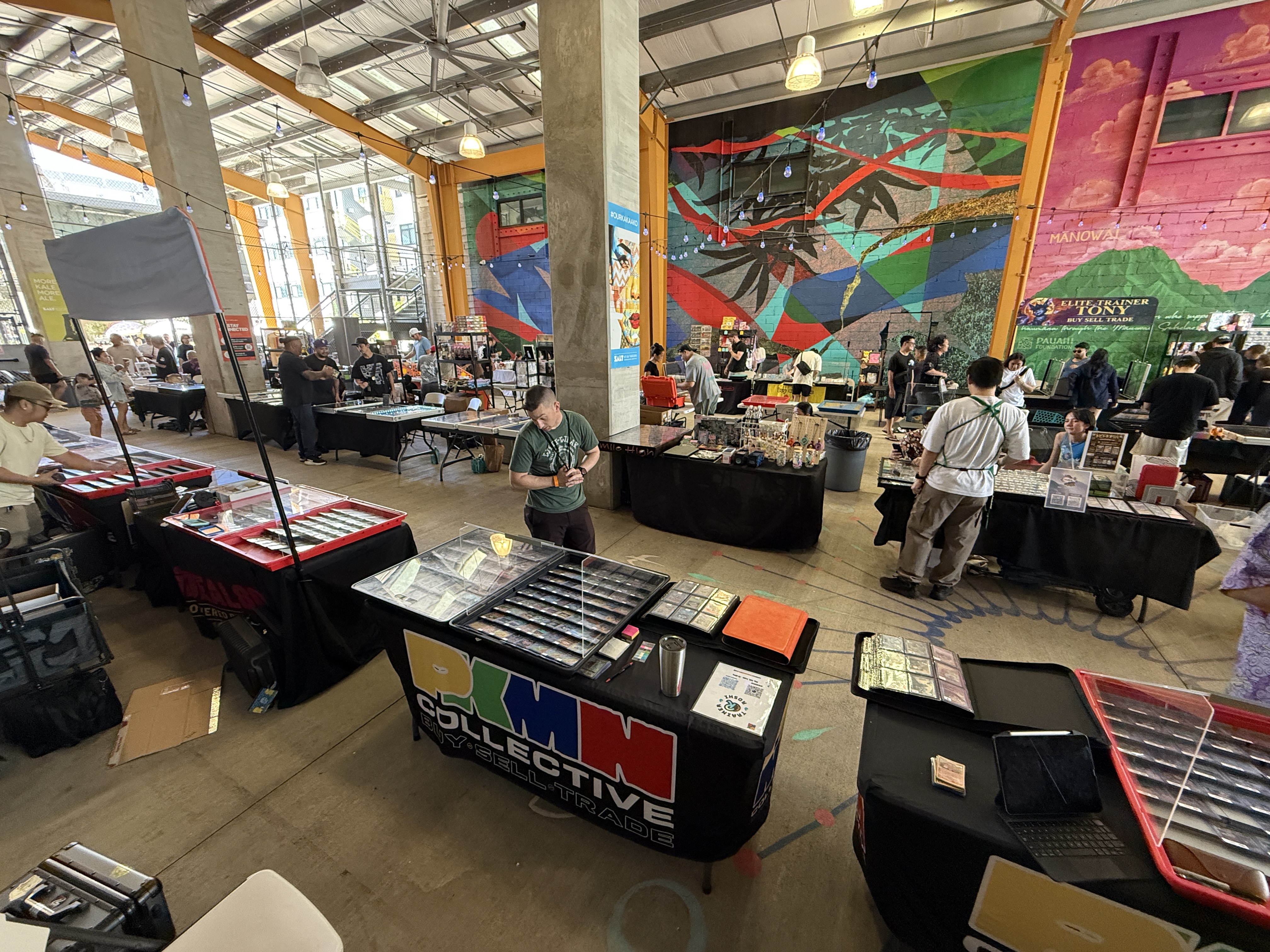
Card shows have their own culture. There's a rhythm to how vendors and collectors interact — a shared set of rules nobody prints on a sign at the door, but everyone follows. If you're new, picking up on these in real-time can feel a little awkward. Miss a few of them and you'll get treated like a tourist; learn them and you'll start getting better deals, better stories, and better relationships with the regulars.
This guide covers the 10 unwritten rules we've learned across years of buying, selling, and trading at shows across the islands. Some are about negotiation. Some are about respect. All of them will save you money, time, or embarrassment — usually all three.
If you've never been to a show before, start with our complete beginner's guide to card shows first, then come back here.
- Ask before you touch the cards
- Don't lowball — open at 10–25% off
- "What's your best?" is the magic phrase
- Bundle for a better total price
- Don't camp at busy tables
- Don't talk down a card to drive the price
- Cash deals get cash prices — say so
- Don't snipe an active negotiation
- Be a regular face, not just a buyer
- Tip the breakers, hosts, and giveaway runners
Why does this matter? Because card shows aren't transactional. The vendor you buy from on Saturday is the same one running a table next month, and the month after that. The collector you trade with at a Tuesday meet is going to be the one DM'ing you about a card you're chasing six weeks from now. Etiquette is just relationship maintenance played out in real time. Get it right and the hobby opens up.
The 10 Rules
Cards behind glass or in display cases — always ask the vendor to pull them. Even cards in binders, ask first before flipping through. Some vendors are relaxed about it, some have specific systems they don't want disturbed, and the polite move is always to check.
If the answer is "go ahead," go ahead. If they want to handle it themselves, let them. Either way, you've signaled that you understand how this works.
If a card is marked $100 and your first offer is $40, you're not negotiating. You're insulting them. Vendors hear lowballs all day, and they remember which buyers do it.
A reasonable opening offer is usually 10–25% off the asking price. Closer to 10% if it's already priced fairly, closer to 25% if you're bundling several cards or paying cash. Above 25% off, you're better off using "What's your best?" instead of throwing a number out.
If you wouldn't say it to a friend's face about something they made, don't say it to a vendor about something they're selling.
This is the standard way to ask a vendor for their bottom price without naming a number first. It signals you're a serious buyer, it saves both sides the back-and-forth, and it keeps you from accidentally over-anchoring high or insulting them with a lowball.
Use it once you've already shown interest in a specific card. Don't use it as the first thing out of your mouth — that reads as a price-shopping move rather than real intent.
Three or four cards from the same vendor, asked for together, almost always gets you a discount on the total. Vendors love bundles because they convert one slow sale into a fast multi-card transaction, and they'll usually drop 10–20% off the combined ask to close it.
The ask is simple: "If I take these four, what's your best?" Then let them think for a second. The number they come back with is almost always cheaper than buying each piece individually.
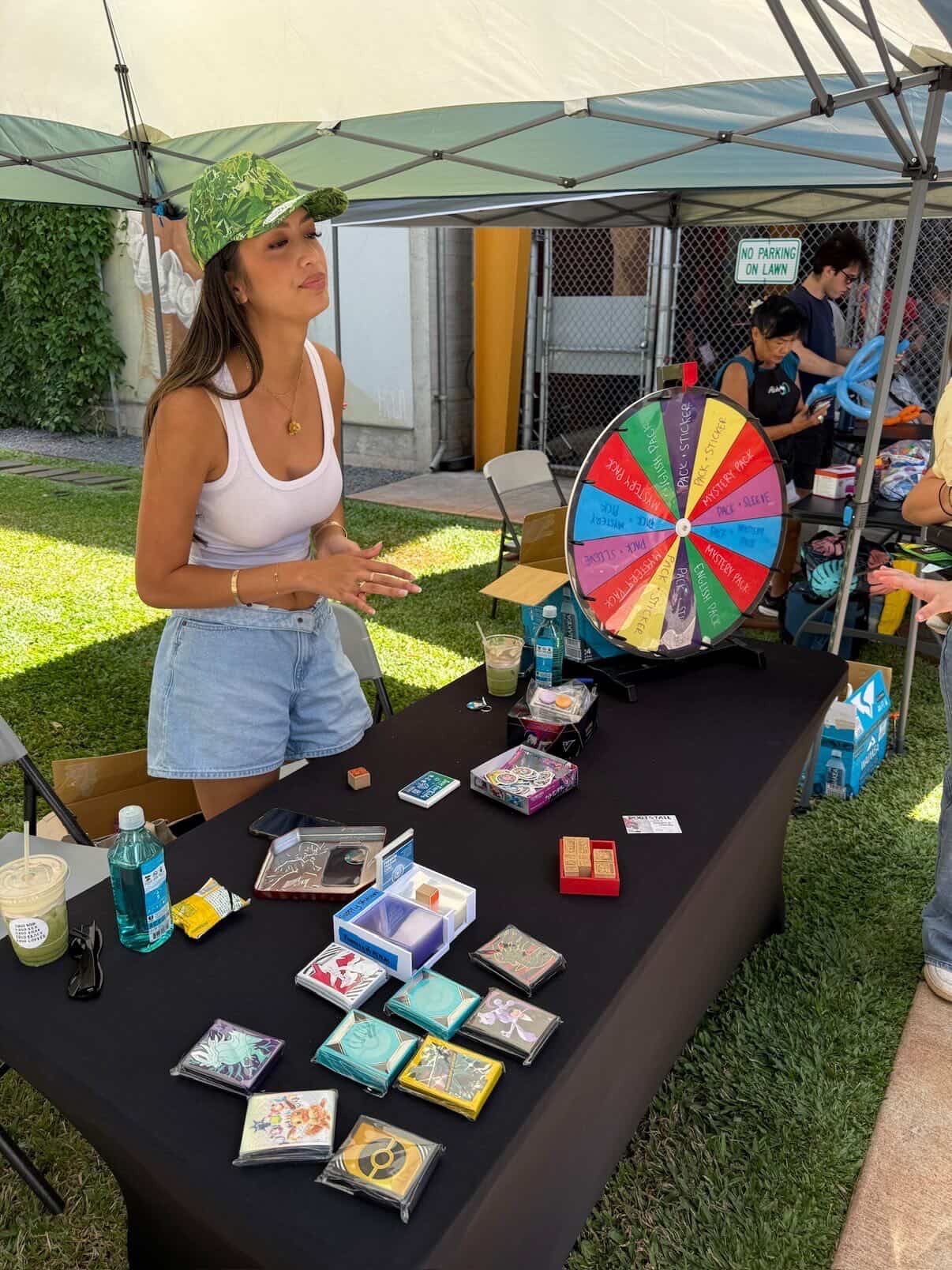
If you're not actively buying and someone's waiting behind you, step aside. Vendors only have so much attention to give, and the buyer who hovers for 20 minutes flipping through every binder while three people queue up behind them is the one nobody remembers fondly.
The right move at a busy table: browse, identify what you're interested in, step aside to think or check comps on your phone, and come back when there's an opening. Vendors notice. The next time you walk up, they remember.
"This corner's a little soft, huh?" "I think the centering is off." These lines, when you're trying to buy, are bad form. Vendors hear them constantly, and the move is transparent. Worse, it puts the vendor on the defensive — and a defensive vendor is not a vendor who's going to give you their best price.
If a card has a real condition issue that affects what you'd pay, mention it cleanly: "I'm working off Near Mint comps but this looks more like NM-MT to me — would you take $X?" That's not talking it down, that's giving the vendor a real reason for your number.
Most vendors are eating 2.5–3.5% in fees on every card swipe. When you negotiate a number, that number usually assumes cash. If you agree on $200 and then pull out a card reader, expect the price to bump back up — that's not the vendor being shady, that's the math.
The cleanest move: state your payment method up front. "If I do cash, what's your best on these?" gets you the better price right away, and avoids the awkward "wait, the price changed" moment at the end.
Cash also unlocks negotiation flexibility you don't get otherwise. A vendor who'd never go below $180 on a $200 card via Venmo will often go to $170 in cash because they're keeping every dollar of it.
If another buyer is in the middle of negotiating a card with a vendor, don't jump in with a higher offer. This isn't an auction. The vendor and the first buyer are working through a price together, and stepping in to outbid them mid-conversation makes you look bad to everyone — including the vendor, who now has to choose between a fast sale and a buyer who plays nicely.
If you really want the card, wait. If the deal falls through, then it's fair game. Until then, browse another table.
The collectors who get the best deals at card shows are the ones the vendors recognize. That doesn't mean you have to spend the most money — it means showing up consistently, talking shop without always trying to buy, and asking about cards you're not even going to take home.
Vendors remember the buyers who treat them like people. Those are the buyers who get a heads-up when something interesting comes in. Those are the buyers who get text messages between shows. Those are the buyers who get their lowest prices.
Five small interactions over six months beats one big transaction every time.
If you hit at a live break, throw a few bucks toward the breaker. If a vendor runs a giveaway and you walk away with something, tip them. If a stream host is putting in time keeping the floor entertaining, drop them a tip on Venmo or Cash App when you leave.
None of this is required. But this is the part of the hobby that runs on goodwill. The breakers, the hosts, the runners who do giveaways — they're putting in extra effort to make shows feel like events instead of just transactions. Tipping is how you tell them to keep doing it.
The thread that ties them all together
If you read all 10 rules and felt like they were saying the same thing in different ways, that's because they kind of are. The whole framework comes down to this: treat the vendors and other collectors like people you'll see again, because you will.
That's it. That's the entire culture of card shows. Vendors who feel respected give better prices and better access. Collectors who play nicely get invited into the conversations that aren't happening on the floor. Showing up with these rules in your back pocket isn't about being polite for politeness's sake — it's about understanding that the hobby compounds, and the relationships you build now are the ones paying off two years from now.
If you're heading to your first show and want a full primer on what to expect, what to bring, and how the floor works — read our beginner's guide to card shows. If you're local to Hawaii and looking for the next show to attend, the upcoming calendar tracks every confirmed event across the islands.